Courses · Events · Journal club meetings

Literature Search Peer Review Buddy Scheme: Round 7 Now Open

The HSLG Committee is pleased to announce Round 7 of the Literature Search Peer Review Buddy Scheme.

About the scheme

The scheme began in 2023 as a way for library staff and information specialists in Ireland to learn from each other about literature searching. It gives librarians who run searches a chance to meet peers and share expertise, which helps improve the quality of their searches.

How it works in Round 7

This round pilots a new activity. You act as a journal peer reviewer and appraise the search strategy of a published systematic review.

All librarians and information specialists based in Ireland are welcome to register. Once registration closes, you will be placed in a group of 4-5 participants. Your group will discuss your notes on the article’s search strategy. The PRESS Checklist 2015 (Table 9) can help you structure your appraisal, but you don’t have to use it.

Timeline

  • 1 to 20 October 2026: Registration is open.
  • 21 October: Participants are told their group and sent a link to the systematic review assigned to it. You will also receive instructions on how to plan your feedback.
  • 21 October to 1 December: Each participant appraises the search strategy of the assigned paper. Your group then arranges a 1-hour virtual meeting to discuss your approach and agree what to tell the journal editor. Everyone should contribute, and the group should aim to reach a joint conclusion.
  • After 1 December: One member of each group completes the evaluation form.

Register

Register for Round 7 here: https://www.smartsurvey.co.uk/t/MHXAI4/

Courses · Events

Webinar: Moving Targets of AI in Systematic Reviews: Where Are We and How to Keep Up

HSLG is hosting an online webinar on Thursday 26th November 2026, from 11:00 to 12:30 GMT. Register on Eventbrite.

Library clients’ questions and needs have expanded. Common questions include which tools to choose, how to use them correctly, and how to report their use. Assessing vendors’ claims independently is crucial, and health libraries are a trusted source of guidance in bridging the responsible-use gap between the tech’s rapid growth and the slow development of legal and ethical guardrails.

This webinar provides a practical guide to choosing appropriate search approaches, writing prompts, evaluating tools and their outputs, and teaching researchers how to use them responsibly.

Learning objectives

  • Distinguish the search types and explain their relevance to systematic reviews
  • Outline copyright and licensing considerations and identify relevant AI features
  • Describe selected prompt engineering techniques and frameworks
  • Identify key checks when choosing a tool for a systematic-review task
  • Recognise limitations of different AI approaches and identify appropriate checks on outputs
  • Outline a practical plan for keeping up with AI developments

About the speaker

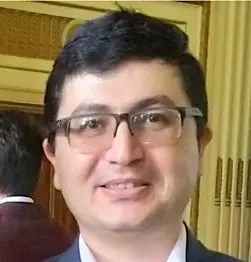
Dr Farhad Shokraneh is Evidence Synthesis Manager at the Infectious Diseases Data Observatory (IDDO), University of Oxford. He has a PhD in Medicine and has worked as an Evidence Scientist at King’s College London, University College London, UCLH, and Cambridge University. With 22 years of experience in evidence synthesis, he has led teams from five continents and delivered projects for organisations including WHO, UN, UNICEF, FDA, NHS, UK NIHR, Cochrane, AWMF, and NICE.

GRADE-CERQual Workshop

Evidence Synthesis Ireland are holding a one-day workshop in The Pavillion, University of Limerick, on GRADE-CERQual (Confidence in the Evidence from Reviews of Qualitative Research).

Presented by Professor Pauline Meskell and Dr. Linda Biesty the objective of the workshop is to introduce the GRADE-CERQual (Confidence in the Evidence from Reviews of Qualitative research) approach to assess confidence in evidence from reviews of qualitative research.

Learning outcomes

To learn how to apply the GRADE-CERQual approach when assessing confidence in findings from qualitative evidence synthesis.

For more information on this workshop and to register click here.

Moving Beyond Living Evidence: Why living evidence is not enough and how we can get the evidence we actually need

Join Prof. Tari Turner, Director of the Australian Living Evidence Collaboration and Research Professor at Cochrane Australia for a morning presentation on Moving Beyond Living Evidence.

Date: 10th September

Time: 9-10am

This webinar will:

  • Describe what living evidence is and why living evidence is important
  • Explain why living approaches are not sufficient to meet our evidence needs
  • Give examples of innovations in research that are needed if evidence is going to be useful and used

Register here for this event.

The Evidence Review Accelerator (TERA) – Helpful Tools and Tips for Information Specialists

This workshop will show participants how to use the Evidence Review Accelerator (TERA) to improve the speed and quality of conducting systematic reviews. This workshop will cover all tools, but will focus on the tools most helpful for information specialists. The workshop will comprise live demonstrations of TERA, conducted by Justin Clark, developer of TERA, the Two-Week Systematic Review (2weekSR) methodology and experienced Information Specialist. The expert skills of the presenter in both conducting reviews and using the tools are a key component of the workshop.

All the tools in the workshop are free and available via TERA: https://tera-tools.com/

The workshop will comprise the following plan:

  • Brief introduction to TERA.
  • Demonstration of creating focused searches using the Word Frequency Analyser, SearchRefiner, Polyglot Search Translator and the Deduplicator.
  • Demonstration of Generative AI-powered screening using MechaScreener.
  • Demonstration of citation searching with SpiderCite.
  • Using TERA Farmer to identify any further relevant studies missed by the database and citation search.

Register here to attend.

Librarians Supporting Literature Reviews with Covidence

Literature reviews and evidence synthesis are more than search strategies and screening workflows. They are collaborative and evolving partnerships between librarians and research teams.

Join us for a discussion with experienced librarians as they share stories from the field: how they got started in evidence synthesis, lessons learned from challenging review teams, how they navigate authorship and expectations, and how their roles are evolving.

If you are a librarian supporting researchers on their evidence synthesis journey, please join us for this informal yet insightful discussion which will explore what really happens behind the scenes of systematic reviews across disciplines, methodologies, and team dynamics. Whether you’re new to supporting reviews or looking to refine your approach, you’ll walk away with practical insights and real-world perspective.

If you can’t attend the live session, register anyway and you will receive a recording 48 hrs after the session.

https://events.zoom.us/ev/AmUZZRAwdr1rz_iuLZog2955lxhNN560w0Yhh5t7WttIu-DOXgy6~AkrqEesdwetCSy4wCsHz331FZiQwVOvRi7_NGWdkykR0wSWXpq7dnuj-XA?lmt=1775050166000&utm_source=email

2026 Cochrane Colloquium

The Cochrane Colloquium brings together people from around the world to exchange ideas, share experiences, and engage in dialogue on the most pressing questions related to evidence generation, synthesis, and use across health and beyond. It is a unique forum for collaboration across disciplines, regions, and perspectives.

As the world of evidence continues to evolve rapidly, the 2026 Colloquium will provide space to reflect, connect, and collectively explore how evidence can best respond to emerging challenges and opportunities while remaining rigorous, transparent, inclusive, and trusted.


Early Bird Registration €1300 (until May 11th)

Click here for more information and to register.

Search Filters for Evidence Synthesis

Carol Lefebvre and Julie Glanville present an online workshop on Search Filters for Evidence Synthesis.

This workshop will cover a range of topics and learning objectives including:

  • Understanding the role and importance of methodological and other search filters;
  • Learning how to find and how to appraise search filters;
  • Learning how to use filters effectively to enhance and focus the search process;
  • Exploring some challenges of using search filters and how to avoid them;
  • Exploring some challenges in adapting search filters from one database / interface into another;
  • Understanding the ethical considerations of using search filters;
  • Learning how to stay up to date with new search filters; and
  • Gaining practical experience in using search filters through hands-on exercises.

For more information and to register click here.

Search Filters for Evidence Synthesis

Online workshop on 4th December from 15.00 – 18.00

Presented by Carol Lefebvre and Julie Ganville

This workshop will cover a range of topics and learning objectives including:

  • Understanding the role and importance of methodological and other search filters
  • Learning how to find and how to appraise search filters
  • Learning how to use filters effectively to enhance and focus the search process
  • Exploring some challenges of using search filters and how to avoid them
  • Exploring some challenges in adapting search filters from one database / interface into another
  • Understanding the ethical considerations of using search filters
  • Learning how to stay up to date with new search filters
  • Gaining practical experience in using search filters through hands-on exercise

Click here for more information and to register.

Too good to be True? Spotting problematic trials in systematic reviews

Join Jack Wilkinson, Senior Lecturer in Clinical Trials at University of Manchester for a 1 hour interactive webinar on Spotting problematic trials in systematic reviews.

The INSPECT-SR (INveStigating ProblEmatic Clinical Trials in Systematic Reviews) tool has been developed for the purpose of assessing trustworthiness of RCTs in order to identify problematic trials. This interactive webinar will introduce the INSPECT-SR tool by way of application to a published clinical trial. Attendees will have the opportunity to use INSPECT-SR to perform trustworthiness checks themselves and learn how the tool can be incorporated when undertaking a systematic review.

For more information and to register for this event click here.